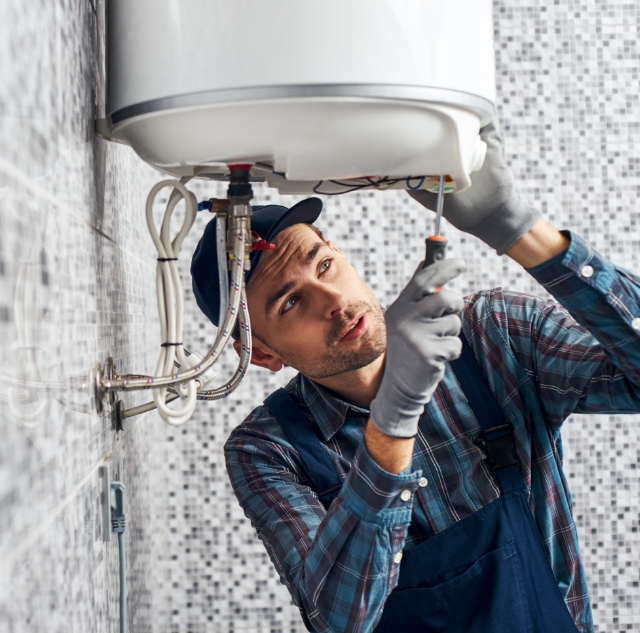
Your Water Heater Could Burst Anytime — Silent Pressure Build-Up
Your Water Heater Could Burst Anytime — Silent Pressure Build-Up
A storage water heater may appear to be working normally even when pressure is building inside the tank. There may be no obvious warning at first—until a valve starts leaking, a pipe connection fails or the heater tank becomes damaged.
Understanding the early warning signs can help prevent water damage, electrical hazards and emergency replacement costs.
What Causes Pressure to Build Up?
When water is heated, it expands. In a properly functioning system, this pressure is safely controlled by components such as the pressure-relief valve and associated pipework.
Pressure may rise excessively when:
- The pressure-relief valve is blocked, faulty or incorrectly installed.
- The incoming water pressure is too high.
- A check valve prevents expanded water from flowing backwards.
- The thermostat overheats the water.
- The heater outlet or connected pipework is restricted.
- Internal scale or corrosion affects the heater components.
- An expansion vessel is missing, undersized or defective where one is required.
If the excess pressure cannot escape safely, it places continuous stress on the heater tank, flexible connectors, valves and pipe joints.
Warning Signs You Should Not Ignore
- Water Dripping from the Relief Valve
Occasional discharge during heating may occur in some systems, but continuous dripping or frequent discharge can indicate excessive pressure, a defective valve or another system problem.
Do not block, cap or seal the relief-valve discharge pipe. It is an important safety component.
- Bulging or Deformed Heater Tank
A swollen, distorted or unusual-looking heater casing may indicate internal tank expansion or structural damage. Switch off the heater and arrange an inspection immediately.
- Banging or Knocking Sounds
Loud knocking, popping or hammering noises may be caused by pressure fluctuations, trapped air, scale accumulation or water hammer in the connected pipework.
- Leaking Pipe Connections
Excessive pressure often affects weaker points first. Flexible hoses, fittings, isolation valves and heater connections may begin to drip or develop visible corrosion.
- Water Becomes Unusually Hot
Water that is much hotter than the selected temperature may indicate a faulty thermostat or temperature-control problem. Continued overheating can increase both temperature and pressure inside the tank.
- Frequent Electrical Tripping
Water leakage around the heater or deteriorated internal electrical components may cause the circuit breaker or RCCB to trip. Do not repeatedly reset the supply without identifying the cause.
Could the Heater Tank Really Burst?
A correctly installed and properly maintained water heater has safety controls designed to manage temperature and pressure. However, the risk increases when these controls are defective, obstructed, incorrectly installed or poorly maintained.
A serious failure may result in:
- Sudden discharge of hot water
- Ruptured pipe connections
- Ceiling and property damage
- Damage to nearby electrical components
- Injury from hot water or steam
- Complete heater replacement and emergency repair work
The heater does not always fail without warning. Minor dripping, unusual sounds, excessive heat and corroded fittings may be early indications that the system requires inspection.
What Should Be Inspected?
A professional water-heater assessment should include:
- Checking the heater tank and casing for leakage, corrosion or deformation.
- Inspecting the pressure-relief valve and discharge arrangement.
- Checking the thermostat and temperature-control operation.
- Examining flexible connectors, valves and pipe joints.
- Assessing the incoming water pressure where necessary.
- Checking for damaged insulation and moisture around the pipework.
- Inspecting electrical connections for overheating or water exposure.
- Confirming that the heater is securely supported.
Safety devices should only be tested or replaced by a competent professional. Never dismantle a pressurised or energised heater yourself.
What to Do If You Suspect Excessive Pressure
If you notice severe leakage, deformation, overheating or unusual noises:
- Switch off the heater’s electrical supply if it is safe to do so.
- Stop using the heater.
- Keep away from leaking hot water.
- Do not block the relief-valve outlet.
- Do not attempt to tighten or remove fittings while the tank is hot or pressurised.
- Arrange for a professional inspection promptly.
Preventive Maintenance Is Safer Than Emergency Repair
Regular inspection can identify weakened connectors, leaking valves, corrosion and control problems before they develop into serious failures.
If your storage water heater is ageing, leaking, making unusual noises or producing excessively hot water, have it checked before the problem worsens.
Alpha & Omega Trinity Pte Ltd provides professional water-heater inspection, troubleshooting, repair and replacement services for residential and commercial properties in Singapore.
📞 Call: +65 6816 2462
📱 WhatsApp: +65 8151 8857
🌐 Website: www.aot-heater.com
#WaterHeaterSafety #StorageWaterHeater #WaterHeaterRepair #PressureBuildUp #PropertyMaintenance #SingaporePlumbing