High Pressure vs Normal Pressure: What Your Plumbing System Really Needs

When it comes to water supply in your home or building, many people assume that stronger water pressure is always better. A powerful shower or fast-flowing tap can feel satisfying, and it gives the impression that the system is working efficiently. However, this common belief can be misleading. In reality, excessive water pressure can silently damage your plumbing system over time, leading to leaks, equipment failure, and costly repairs.
Understanding the difference between high pressure and normal pressure is essential for homeowners, building managers, and facility operators who want to maintain a safe and reliable water system.
What Is Normal Water Pressure?
Normal water pressure refers to a balanced and controlled level of force within the plumbing system. It is the range that pipes, fittings, and appliances are designed to handle safely over long periods.
In most residential and commercial systems, normal pressure ensures:
- Smooth and steady water flow from taps and showers
- Minimal stress on pipes and joints
- Proper operation of appliances like water heaters and washing machines
- Reduced risk of leaks and failures
Even though normal pressure may not feel extremely strong, it is actually the optimal condition for durability and efficiency. Plumbing systems are engineered with this pressure range in mind, meaning that when pressure stays normal, the system performs as intended.
What Is High Water Pressure?
High water pressure occurs when the force of water moving through the pipes exceeds the recommended operating range. This can happen due to several reasons, such as:
- Faulty or missing pressure reducing valve (PRV)
- High incoming supply pressure from the main line
- Booster pump settings that are too high
- Poor system design or incorrect pipe sizing
At first, high pressure may seem beneficial. You might notice:
- Stronger showers
- Faster filling of tanks or buckets
- More “powerful” water flow
However, this increased force puts continuous stress on every component in the system. Over time, this stress leads to hidden damage that often goes unnoticed until a serious problem occurs.
The Hidden Dangers of High Water Pressure
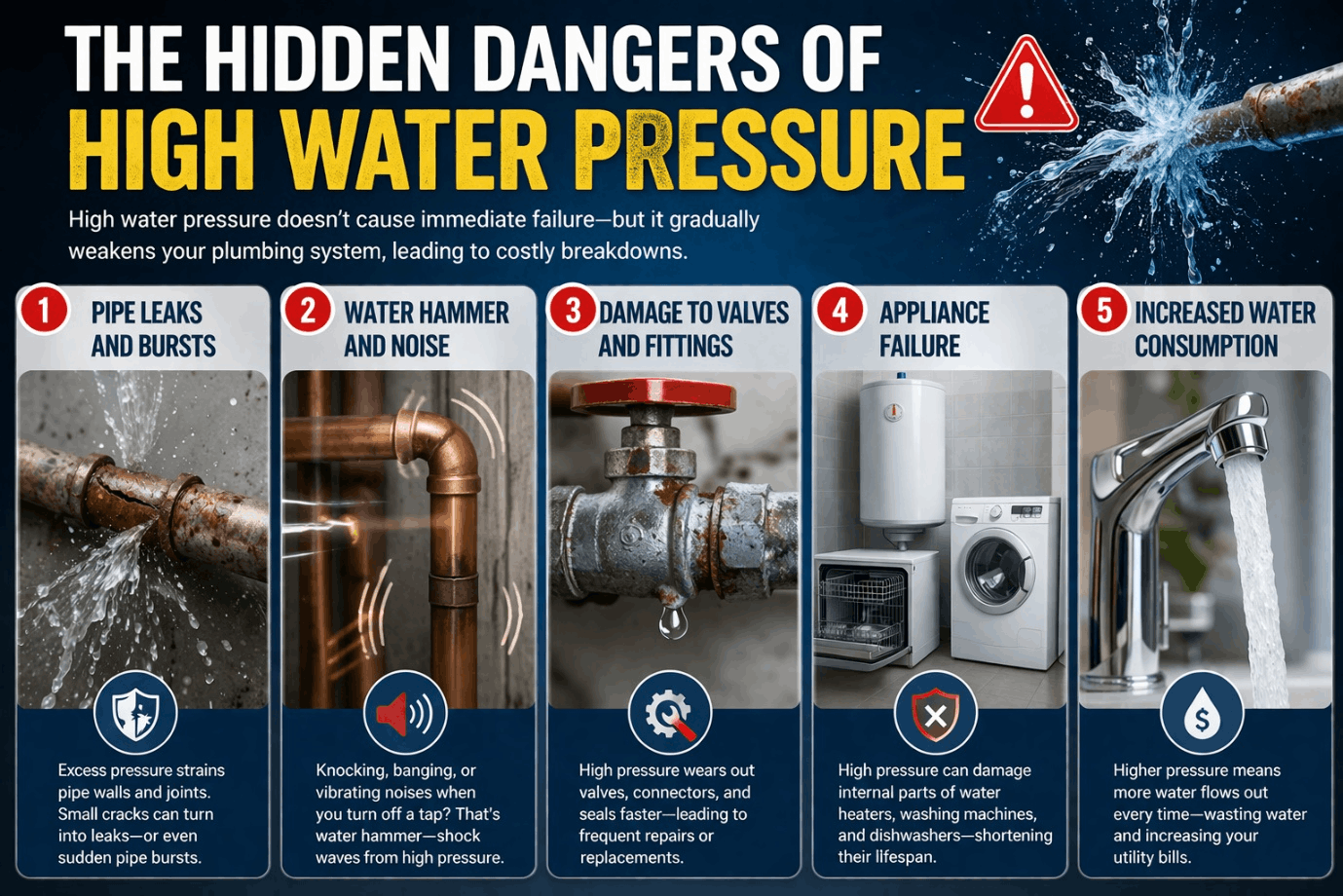
High water pressure does not usually cause immediate failure. Instead, it gradually weakens your plumbing system, making it more vulnerable to breakdown.
- Pipe Leaks and Bursts
Excess pressure puts strain on pipe walls and joints. Small cracks or weak points can develop into leaks. If left unattended, these can escalate into sudden pipe bursts, causing water damage and disruption.
- Water Hammer and Noise
If you hear knocking, banging, or vibrating sounds when you turn off a tap, it may be due to high pressure. This phenomenon, known as water hammer, occurs when water suddenly stops or changes direction, creating shock waves inside the pipes.
- Damage to Valves and Fittings
Valves, connectors, and seals are particularly sensitive to pressure. High pressure causes them to wear out faster, leading to frequent maintenance or replacement.
- Appliance Failure
Appliances such as water heaters, washing machines, and dishwashers are designed to operate under normal pressure conditions. High pressure can damage internal components, shorten lifespan, and increase the risk of malfunction.
- Increased Water Consumption
Higher pressure means more water flows out each time you open a tap. This results in unnecessary water wastage and higher utility bills, even if your usage habits remain the same.
Signs That Your Water Pressure Is Too High
Many people are unaware of pressure problems until visible damage appears. However, there are early warning signs you can watch for:
- Water splashes aggressively when you open a tap
- Pipes produce knocking or vibrating sounds
- Frequent leaks at joints or pipe connections
- Faucets or valves wear out quickly
- Appliances require frequent repair
- Sudden and unexplained pipe failures
If you notice any of these signs, it is important to take action before the issue worsens.
Why Normal Pressure Is Always Better

Normal water pressure offers several long-term advantages that protect your plumbing system and reduce maintenance costs.
Stability and Reliability
With normal pressure, water flows consistently without sudden fluctuations. This ensures a comfortable and predictable user experience.
Longer System Lifespan
Pipes, fittings, and appliances last significantly longer when they are not exposed to excessive stress.
Lower Maintenance Costs
By avoiding leaks, bursts, and equipment damage, you reduce the need for repairs and replacements.
Energy and Water Efficiency
Normal pressure prevents unnecessary water usage and helps maintain efficient operation of water-related appliances.
Safety
Maintaining proper pressure reduces the risk of unexpected failures, flooding, and property damage.
In simple terms, normal pressure keeps your system healthy, while high pressure slowly destroys it.
How to Control and Maintain Proper Water Pressure
Managing water pressure is not complicated, but it requires awareness and regular checks.
Install a Pressure Reducing Valve (PRV)
A PRV helps regulate incoming water pressure to a safe level. It is one of the most effective ways to protect your system.
Use a Pressure Gauge
Checking your water pressure periodically can help you detect problems early before damage occurs.
Regular Maintenance and Inspection
Professional inspections can identify hidden issues such as worn valves, incorrect pump settings, or system imbalances.
Proper System Design
Correct pipe sizing, proper layout, and suitable equipment selection are essential for maintaining stable pressure.
Avoid Unauthorized Modifications
Unplanned changes to your plumbing system can disrupt pressure balance and lead to long-term issues.
Conclusion
Water pressure plays a critical role in the performance and safety of your plumbing system, yet it is often overlooked. While high pressure may seem beneficial at first, it creates hidden risks that can lead to leaks, equipment damage, and costly repairs.
Normal pressure, on the other hand, provides the perfect balance between performance and safety. It ensures smooth operation, protects your system, and helps you avoid unnecessary expenses.
The key takeaway is simple:
Stronger water is not always better. Controlled pressure is what your plumbing system truly needs.
Need Help Checking Your Water Pressure?
If you are unsure about your system’s pressure or notice any warning signs, it is always best to consult professionals before the problem becomes serious.
📞 Call / WhatsApp: +65 8151 8857
Alpha & Omega Trinity Pte Ltd